
Refreaming
“Behavior Lens”
to a
“Social Thinking Lens”
Children who struggle with executive functioning skills are not intentionally or willfully missing cues and trying to be difficult.
Their social brain does not yet have the hard wiring required to interpret social information.
We should consider the actions and reactions of our children through the lens of a social thinking challenge rather than through the traditional behavior lens.

Regulate emotions
Complete
tasks
3. Allow for frequent breaks.
What are Executive Function Skills?
The benefit of frequent breaks include regulating moods, maintaining focus, and persisting through tasks that may take awhile to complete.

Executive Functions are important skills that help us to:



Hold information
in our
working memory
Stay on task
4. Simplify directions.

Use short sentences with clear instructions. Instead of, “If you put clean up your toys and on your shoes we can go outside to play,” try:
Ignore distractions
First, clean up your toys and then put on your shoes.
A student who struggles with
Executive Functioning may:


- Have trouble completing school work
- Forget something you’ve just told them
- Have trouble following multi-step directions
- Become emotional when routines change
- Get frustrated easily
- Struggle to stay on topic in conversations
- Easily forget important information
5. Develop social and emotional skills through self awareness.

- Show your child what feelings look like
- Help your child identify the feelings of others
- Help your child identify the feelings of others
- Talk about your child’s emotions with them


Supporting Executive Function Skills
at Home
What it Looks Like When Children
Struggle with Executive Functions
Cognitive Flexibility
Self-Control
Chances are...you’re doing it already!
Here are 5 ways to expand on and develop executive functioning skills.

- May blurt things out
- Do unsafe things without thinking it through
- Are likely to rush through work without checking it
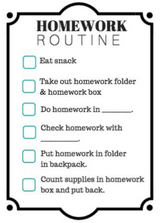
1. Create habits and routines.
Try to structure your child’s day so that they follow the same predictable order of tasks to support time management.
- Think is very concrete ways
- Don’t see other options or solutions
- Find it difficult to change course
- May get panicky and frustrated when they’re asked to do so

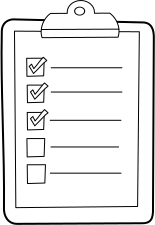
2. Chunk large tasks and create “to-do” lists.
Working Memory
Get dressed.
Put dirty clothes
in hamper.
Eat breakfast.
Brush teeth.
Put on socks
and shoes.
- May quit a non-prefered task halfway through to do a prefered task
- Have touble following rules conistently
Instead of saying,
“Get ready for school”,
try a checklist like this:
- Have trouble with multi-step tasks
- Have a hard time remembering directions, taking notes, or understanding something you’ve just explained to them
- Frequently may say, “I forgot what I was going to say.”